

Teacup Chihuahua care is a specialized commitment requiring strict management of blood sugar, dental health, and body temperature. These miniature dogs face unique physiological challenges due to their small size. This guide covers hypoglycemia, dental disease, temperature regulation, and veterinary monitoring. It provides actionable steps for owners to ensure long-term wellness.
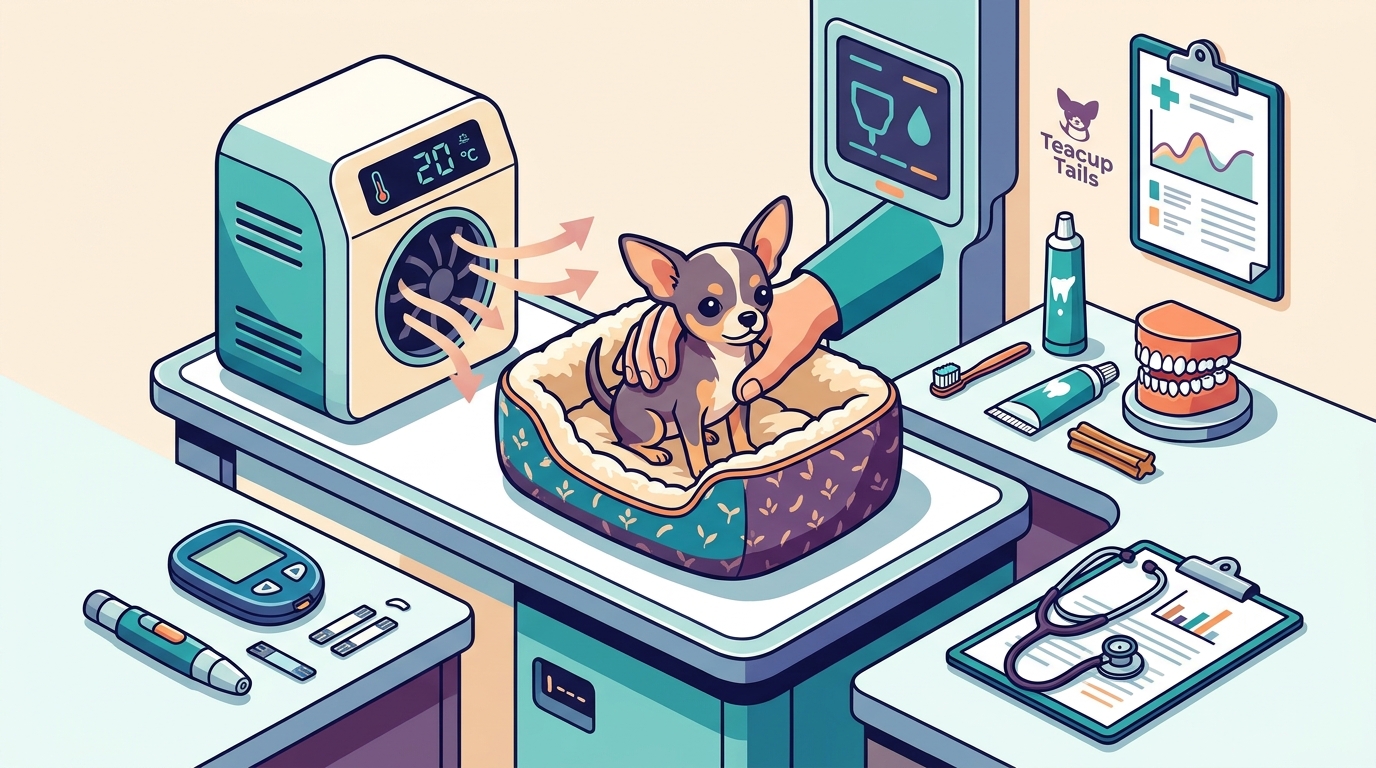
Hypoglycemia Management
Hypoglycemia is a condition where blood sugar levels drop dangerously low. In teacup Chihuahuas, this is a critical risk due to their low body mass. Their small size means they have limited glycogen stores. A missed meal can lead to rapid energy depletion. For additional details, review the Teacup Micro Chihuahua Puppies.
Recognizing Early Symptoms
Feeding Protocols
Small, frequent meals are essential for stability. Feed your teacup Chihuahua four to six small meals daily. This prevents long gaps between eating. Avoid high-carbohydrate foods that cause spikes and crashes. Consult your veterinarian for a specific diet plan.
Dental Disease Prevention
Dental disease is the most common health issue in Chihuahuas. Their small mouths often result in overcrowded teeth. Plaque builds up quickly, leading to gum disease and tooth loss. Preventive care is non-negotiable for this breed. For additional details, review the Best Blogs for Teacup.
Daily Brushing Routine
Brush your dog's teeth daily using a dog-specific toothpaste. Human toothpaste contains ingredients toxic to dogs. Start training your puppy to accept brushing early. Consistency is key to preventing tartar buildup.
Professional Cleanings
Professional dental cleanings are recommended annually. Your veterinarian will assess gum health and remove tartar. Early intervention prevents severe periodontal disease. This condition can affect the heart and kidneys if left untreated.
Temperature Regulation
Teacup Chihuahuas struggle to regulate their body temperature. Their small surface area to volume ratio makes them prone to heat and cold stress. They lose heat quickly in cool environments. They overheat rapidly in warm conditions.
Cold Weather Protection
Use clothing to maintain body heat in cold weather. A lightweight sweater or coat is often necessary. Avoid prolonged exposure to outdoor cold. Monitor for shivering or lethargy as signs of hypothermia.
Heat Safety
Provide ample shade and water in hot weather. Never leave your dog in a parked car. Their small bodies overheat faster than larger breeds. Watch for excessive panting or drooling. These are signs of heat exhaustion.
Veterinary Health Monitoring
Regular veterinary checkups are vital for teacup Chihuahuas. Their small size can mask underlying health issues. Frequent visits allow for early detection of problems. Your veterinarian will monitor weight, heart health, and joint stability.
Weight Management
Obesity is a significant risk for small breeds. Excess weight strains their delicate joints and heart. Maintain a healthy weight through portion control. Your vet will provide ideal weight ranges for your specific dog.
Joint Health
Patellar luxation is common in Chihuahuas. This condition involves the kneecap slipping out of place. Watch for limping or skipping while walking. Early diagnosis can manage pain and mobility issues.
Care Comparison Table
| Health Area | Standard Chihuahua | Teacup Chihuahua |
|---|---|---|
| Feeding Frequency | 2-3 meals daily | 4-6 small meals daily |
| Dental Care | Weekly brushing | Daily brushing |
| Temperature Sensitivity | Moderate | High (requires clothing) |
| Vet Visits | Annually | Every 6 months |
Key Takeaways
- Hypoglycemia is a primary risk requiring frequent, small meals.
- Daily dental brushing is essential to prevent overcrowding issues.
- Teacup Chihuahuas need clothing in cold weather to maintain heat.
- Heat exhaustion is a faster risk than in larger breeds.
- Bi-annual veterinary checkups are recommended for early detection.
- Weight management is critical to protect delicate joints.
- Patellar luxation is a common joint issue to monitor.
- Choose a reputable breeder like Teacup Tails for healthy starts.
Frequently Asked Questions
How often should I feed a teacup Chihuahua?
Feed your teacup Chihuahua four to six small meals daily. This prevents hypoglycemia. Avoid large gaps between meals.
Do teacup Chihuahuas need special food?
How can I prevent dental disease?
Brush their teeth daily and schedule annual professional cleanings. This prevents plaque buildup and gum disease.
Are teacup Chihuahuas sensitive to cold?
Yes, they lose heat quickly. Use a sweater or coat in cool weather. Monitor for shivering.
How often should I visit the vet?
Visit your veterinarian every six months. This allows for early detection of health issues.
What is hypoglycemia?
Hypoglycemia is dangerously low blood sugar. It causes lethargy and trembling. Immediate feeding is required.